
OutpostNo. 116 min read
A Love Story with Data
It started with a Blogger blog in 2009 and a one-click Google Analytics integration. The breadcrumbs we leave online are an asset we own, and most of us give it away freely.
The origin of this love story began with a blog written in 2009 as an undergraduate at the University of Dayton. A toddler digital world, not yet inundated with timelines and algorithmic feeds. At this time Facebook was relegated to those with a university email address. The web felt raw and capacious. Our attention was not yet imprisoned. Creating anything in the digital world felt as if you were shouting into the void.
I had a blog before I had a Facebook. At that time it was through Blogger, and creative anxiety manifested differently, as I saw it as more of a personal journal. People were not yet interconnected through a "social network" underpinned by a neural network. Blogger had just been acquired by Google, serendipitously introducing me to Google Analytics through a one-click integration.
I was content creating into a void, but soon I realized that there were curious souls on the other side. Google Analytics helped me identify them as "impressions," "views" and "clicks." Anonymous souls standing in the void, deciding to consume (even if briefly) what I produced. This feedback loop caused sparks to fly and my imagination to stretch. During this time my psychology major required me to conduct studies that would be analyzed through SPSS (Statistical Package for the Social Sciences) for significance. This inherently had a lag: I collected observations on how students carried their books, transferred them to my dinosaur machine (laptop) and waited for it to tell me if what I observed was significant.
The digital equivalent of observing the world
In exploring Google Analytics, I quickly realized there was a digital equivalent to observing the world, to understanding people. Cutting the middleman out of the oxytocin rush. A pure feedback loop directly to my bloodstream. Cookies represented the digital version of people; the events they conducted online were observed by the browser, not me sitting with a notebook. These observations were synthesized into a clunky but intriguing dashboard, granting me a new view into the world. There was an abyss waiting to be explored, a whole new (digital) world that was being crafted by creatives.
It would take graduating with a psychology degree, attending business school and then working at an office furniture manufacturer before I'd find my way to a career in digital marketing. Digital marketing in 2015 was still in its pubescent state. Social media was just working out how to engineer our attention to maximize profits, and true attribution was a white whale. I do remember being amazed by concepts like a "data layer," which essentially categorized and indexed information on a digital property so it was more easily ingested by Google Analytics.
An aside on Google Analytics. Thank you for all that you have done for me. You served as the platform that allowed me to understand how data moves across the web through practical applications. You served as my specialty platform as I started my consulting career, and even to this day I'm sure there's opportunity to make money from implementing Google Analytics, albeit the death of cookies and the evolution of AI will reduce your need.
The crux of the addiction
In today's world, this concept of receiving immediate feedback is the crux of the addiction. It reminds me of the feeling I had when I first received feedback from the void. In this internet age the feeling is commoditized through the attention economy. The constant refresh to see how your digital content is perceived is like Pavlov measuring our salivation, ensuring the conditioning was effective.
I often hear people talk about a dopamine hit when they are engaging with social media. That is the "slot machine effect," where you pull down and the feed refreshes as you wait for more content. I encourage people to value oxytocin over dopamine in the digital world by finding community and curating deeper relationships, being more raw and authentic vs. following trends.
The foundation of everyone's journey through the digital world is "data." It's difficult to define given it's a fundamental element: it comprises the whole internet, your follower count, your wifi password and the love of my life. It orchestrates the digital economy and facilitates the attention economy. It's worth more than gold, yet we give it away freely. We remain blind to its value, thus we trade it for 10% off at retailers.
As a devout rationalist I imagine peeling back the layers of these complex problems until I unearth the fundamental truth. This purist approach by philosophers like René Descartes is not feasible in the modern web; instead we take a Bayesian approach to understand the probability of something being correct. Probabilities. Data facilitates a probabilistic understanding of the world, thus serving as a mechanism to relieve anxiety. A way to help people understand who they are and how they orient to the world.
The story we leave behind
There's a story that we leave as we traverse the digital world. Bifurcated across digital and physical worlds, but traversed by the same individual. The question is what is the story that we are telling in the digital world. Not just the explicit story that we leave for 24 hours on our Instagram accounts, but this endemic story that is being painted as we pick up our phones, engage with apps, search websites and interact with agents. These breadcrumbs are all data points about our lives that are collected by these large companies to further their profit motives. It's an asymmetric relationship, where these companies truly know more about you than you do about yourself.
As we move into this new AI-native world, we must ask ourselves who is in control of the narrative. People often underestimate their ability to be influenced. Influenced by the content they consume, the ads, the propaganda, the narratives being pushed. The content that we consume from digital sources that we've never met in real life forms a parasocial relationship. These parasocial relationships have a significant impact on how we view the world. The post-generative-AI world has added another layer to this already complex digital ecosystem, requiring us to question if content is human-made. As we are still treading water with social media, a tidal wave has arrived.
Meta, formerly Facebook, was just found liable of causing harm to children through social engineering an addictive product. This is two decades after reaching 100 million users. A platform this large can follow profit motives and outrun their social responsibility until there's ample cash to compensate those they've hurt. I fear we will not have the same timetable with AI.
A natural resource you already own
I believe data to be a natural resource that is ubiquitous, omnipresent and serving as the fuel to economic growth. When the analogy of data being worth more than gold became commonplace, most people never stopped to think that they were owners of a valuable asset.
An asset that is more comparable to a memory: priceless to the owner, insignificant to unrelated actors, but at scale, aggregated, these become quite valuable. A family heirloom, extremely valuable to you but trash to the vast majority of unrelated actors. Scale comes from networks, and that is where the value is for the masses.
You pay to lease this data to your favorite apps. It's stored on their servers and gatekept by them. Even though those pictures, posts, memories mean so much to you. They are what shapes your life.
As we enter into this new phase of AI growth, we must ask ourselves what role we play in fueling the future. How being mindful of the data assets we own provides us leverage.
If you're interested in taking the next step, take a look at the resources at FranklyData.com.
More from the Outpost
All posts →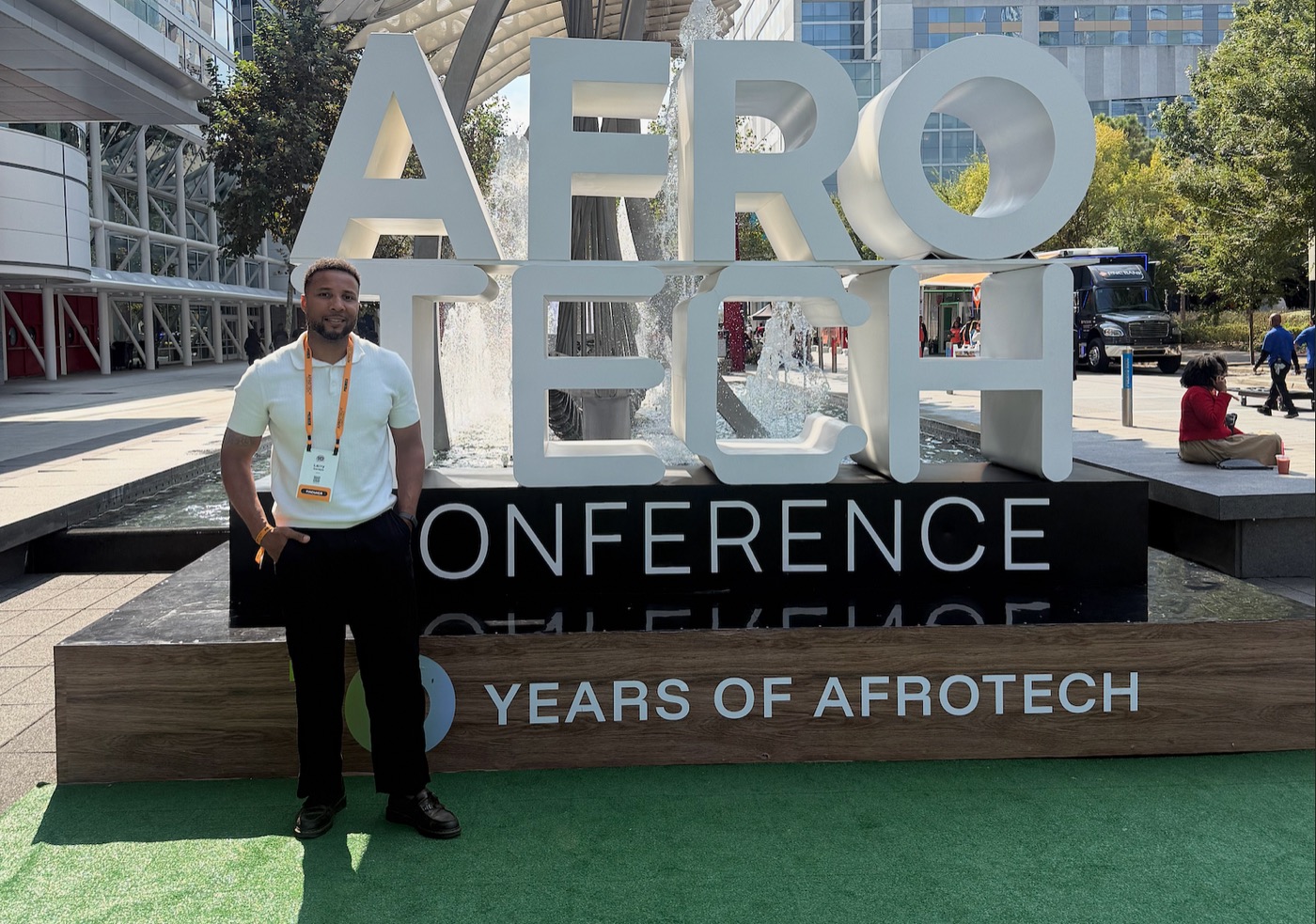
No. 12Nov 10, 202611 min
Is Afro Tech worth it?
Notes from a week in Houston: what the ticket really buys you, the sessions that woke up the kid in me, and what Afro Tech made clear about what I'm building.
No. 10Sep 24, 20266 min
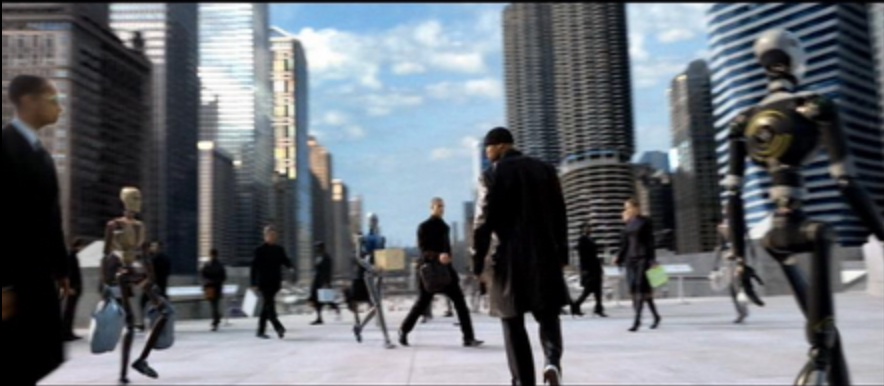
Principles of AI Regulation
I rewatched I, Robot and came away with three ground rules for a world where machines and humans co-exist: benevolence, decentralization, and mutuality.

No. 09Sep 17, 20268 min
Extinction or Utopia: AI in 2026
A group chat about whether there should be an "AI slow down" propelled me to write: what one would look like, whether the AI leaders calling for it are genuine, and why I'm for it anyway.