OutpostNo. 1211 min read
Is Afro Tech worth it?
Notes from a week in Houston: what the ticket really buys you, the sessions that woke up the kid in me, and what Afro Tech made clear about what I'm building.
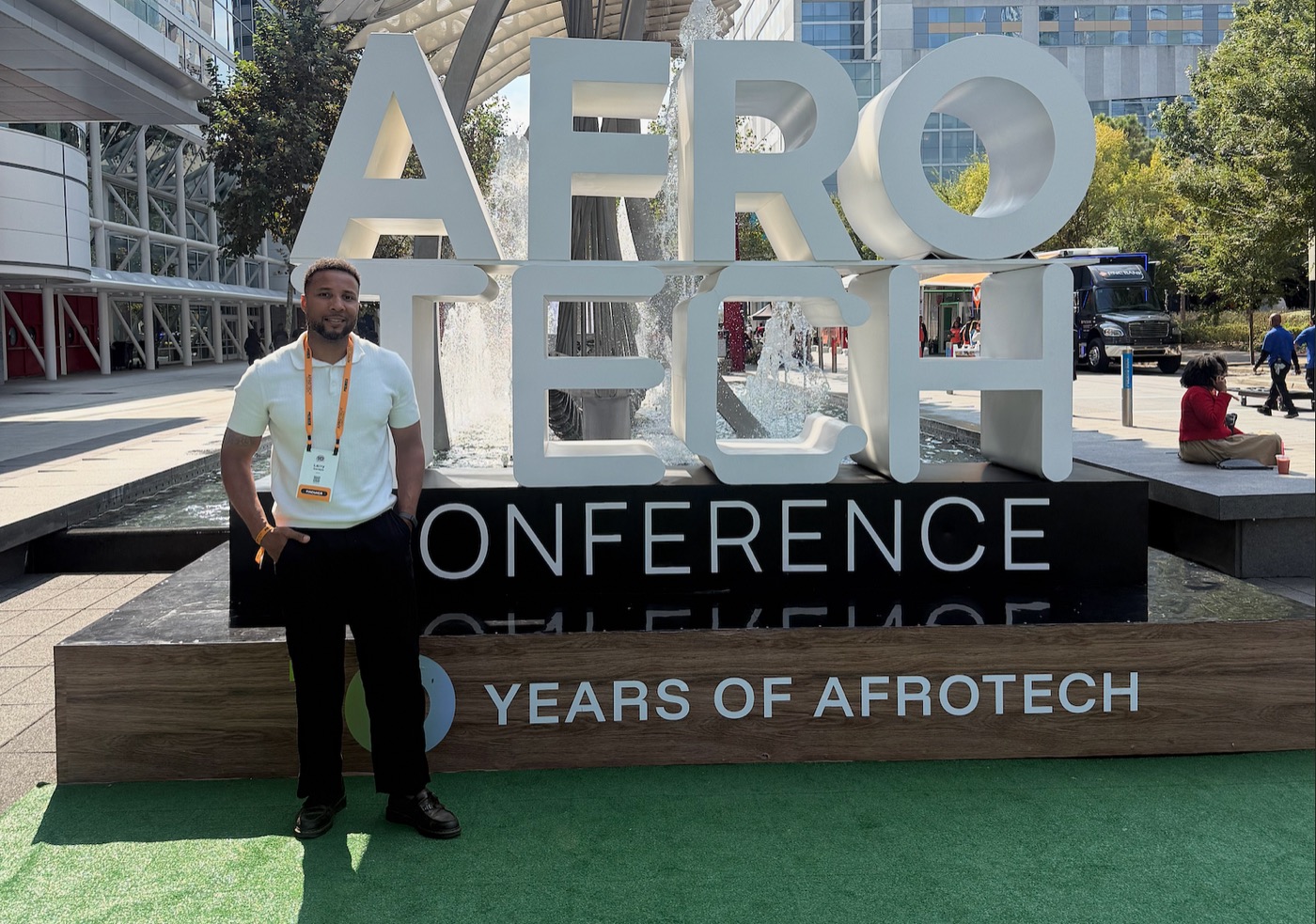
As I descend from the intellectual high of a week full of technology, and detox from an abundance of culture, I figured I would capture a few thoughts on the 2026 Afro Tech Conference.
I know there are a ton of people who have thought to themselves, "Is Afro Tech worth it?"
Monetarily
A simple way to reduce the monetary cost is to buy early bird tickets. I purchased my Premier ticket the Thursday before Afro Tech. I actually attended an Afro Tech send-off event hosted by Chi Tech Collective, which made me feel more comfortable with the investment. The difference is something like $350.
The Premier pass did have its limitations, but I was most bummed that I didn't get to see Andrew Yang speak. The different passes put you on different tracks with different sessions you can attend. The passes also determine the color that will be around your neck for the next week. The colored lanyards unintentionally introduce a tiering system that I assume others were aware of as well. Operationally it's imperative to maintain the different tracks, given there are workers standing outside the convention sessions to make sure you have a badge. I definitely investigated the "act confused and walk into the Andrew Yang speech" play, but the aunties swiftly ended that thought. I also quickly realized that even if I did manage to get in, I would be the only one with an orange badge on. Which would only crank up the volume on my inner voice calling me a "Broke Boy."
In terms of accommodation, I always start with Airbnb (an employer that was there), but this time left me a bit chilly. I asked to check in early on Monday, which I'm told is possible for a fee. The $25 check-in fee is a bit more capitalist than I'd prefer, but after getting my badge, walking to the conference center, eating a solid steak from the adjacent steakhouse and networking, I obliged. Then I quickly realized there was no hot water. So I took cold showers the first two days until switching to the Cambria Hotel. I got refunded from Airbnb, so I low key came up since I only had to pay for two days at the hotel. Needless to say, booking early can save you on a hotel as well.
Pro tip: I absolutely suggest you get a hotel within walking range of the convention center. Keep in mind it's hot, so even a 15-minute walk can become moist. There are also a lot of good sessions that start at 8:00am, so being closer certainly helps.
For many people it's more than a monetary decision. There's the time commitment, and if you advocate for sponsorship through your employer, there's political capital you've expended. In order to do the cost equation, you need to understand what you are looking to accomplish.
Goals
I didn't come with much of a plan or a set of goals. I almost imagined experiencing Afro Tech phenomenologically, being in tune with any opportunity that is meant for me. Although I was a lot more intentional about establishing a personal agenda once I was there, even while fighting with that app to plan sessions throughout the day.
Employment
I've worked in technology for over a decade in Chicago and now serve in a leadership role. Although I'm not actively looking, it was nice to have conversations with recruiters from companies I've been interested in. I've been exposed to many of the brands that were in attendance from working at a large consulting firm.
I was elated to see so many young professionals in attendance. Each time, I would ask them about their relationship with AI and what college was like with AI. The primary piece of advice I gave was to build a digital representation of what you're passionate about. Discovering passion takes a bit of time, but the more you learn, iterate and build, the sooner the universe will tilt in your favor.
It was fulfilling to see so many early-career professionals thriving. It caused me to think deeply about how their future will be shaped by the AI era that's settling into early-career roles quite comfortably. If it were my goal to leave with a job, I would have been much more intentional: making contact beforehand via LinkedIn and actually applying for the role. I would have ranked each company and had a thoughtful approach to at least 20 of them. I heard of multiple people having final interviews at Afro Tech.
Suggestion: Preparedness training could lead to a macro-level impact. Increasing the student placement rate by a few percentage points would be impactful. I see this as a possible tool Afro Tech can create: an agent that prepares students. There was a resume review station that could be digitized. The same with interview prep. Just a thought.
Entrepreneurship
I'm entrepreneurial, so naturally I gravitate towards builders. There were a lot of business owners and 9-to-5 founders applying technology across a wide set of use cases. There was an idea hour where people came to share their ideas with business coach Rachel Rodgers. I really enjoyed hearing how people were creating solutions for problems they were passionate about. From smart grids to carpooling apps, there were so many examples of how AI can help solve problems big and small. Learning how advanced people were with their AI stacks gave me a good barometer for where I am skills-wise.
I spoke to a fair amount of people about the platform I have been building. I received a ton of great feedback and some thoughts on how I might go about monetizing. More on FranklyData later.
Seasoned in networking, not looking for a role but open to whatever opportunities are meant for me, I set off solo and figured I would run into people I knew or meet new people. I ended up running into a few people I've crossed paths with professionally.
Networking
Attending showed me how much I could give and how much I could still learn. Turns out that having over a decade of experience in technology consulting can be helpful to others. My mind was also expanded by seeing how many other pathways there are into a technology career. There is both an art and a science to networking. I usually started with something like:
"How has your Afro Tech been?"
"Have you formed a relationship with AI?"
That could lead to a conversation on their favorite session, the election, AI policy, their favorite AI model, a business idea, invite-only events, data sovereignty, smart cities or a slew of other directions. As the conference went on, I became sharper on what it is I was there for. For those involved in the public sector or academia, I would talk about how research can inform policy, and it made me realize that a fellowship could be a great next chapter. I have some thoughts on policy. When I would speak to entrepreneurs, I would try to add some thoughtful additions to their ideas and solicit thoughts on what I'm building. The conversations around AI models usually began with a conversation about our love for Claude. Although there was a good session on OpenAI's Dots, I would first need to get over my distrust of Sam Altman. The AI futurism conversations were all quite compelling.
The conference
There were so many great sessions that I attended, but I want to provide a flavor of them below.
Cliff Worley spoke on his tech stack
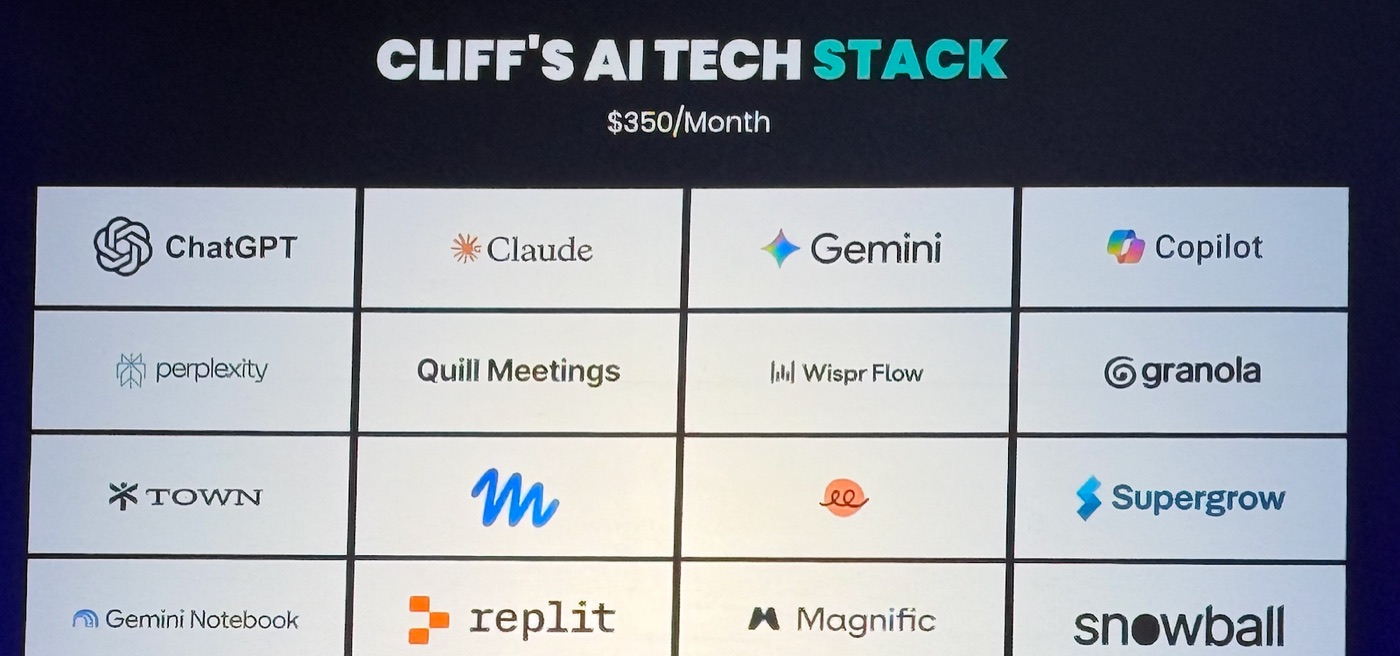
For visual learners, he recommended NotebookLM. You can feed it long sources, like a lengthy article or a video over an hour long, and it turns them into visual, digestible formats. He pointed out that it's free.
He uses Replit to build landing pages. He uses Magnific for image and video generation because one subscription gives him access to all the major models, including new ones as they come out, so he doesn't have to sign up for each model separately.
Snowball AI finds content that is going viral on social platforms, especially TikTok, and breaks down why it worked. You can then rewrite those hooks for your own business. He credited it with helping his Instagram grow. He also mentioned he has written a guide on how to use each tool in the stack.
Satellites
I know that I wasn't the only one who found this session to be truly inspirational. Beyond the juxtaposition of looking at a real satellite while listening to "Grillz," we were able to see representation in the aerospace engineering space.
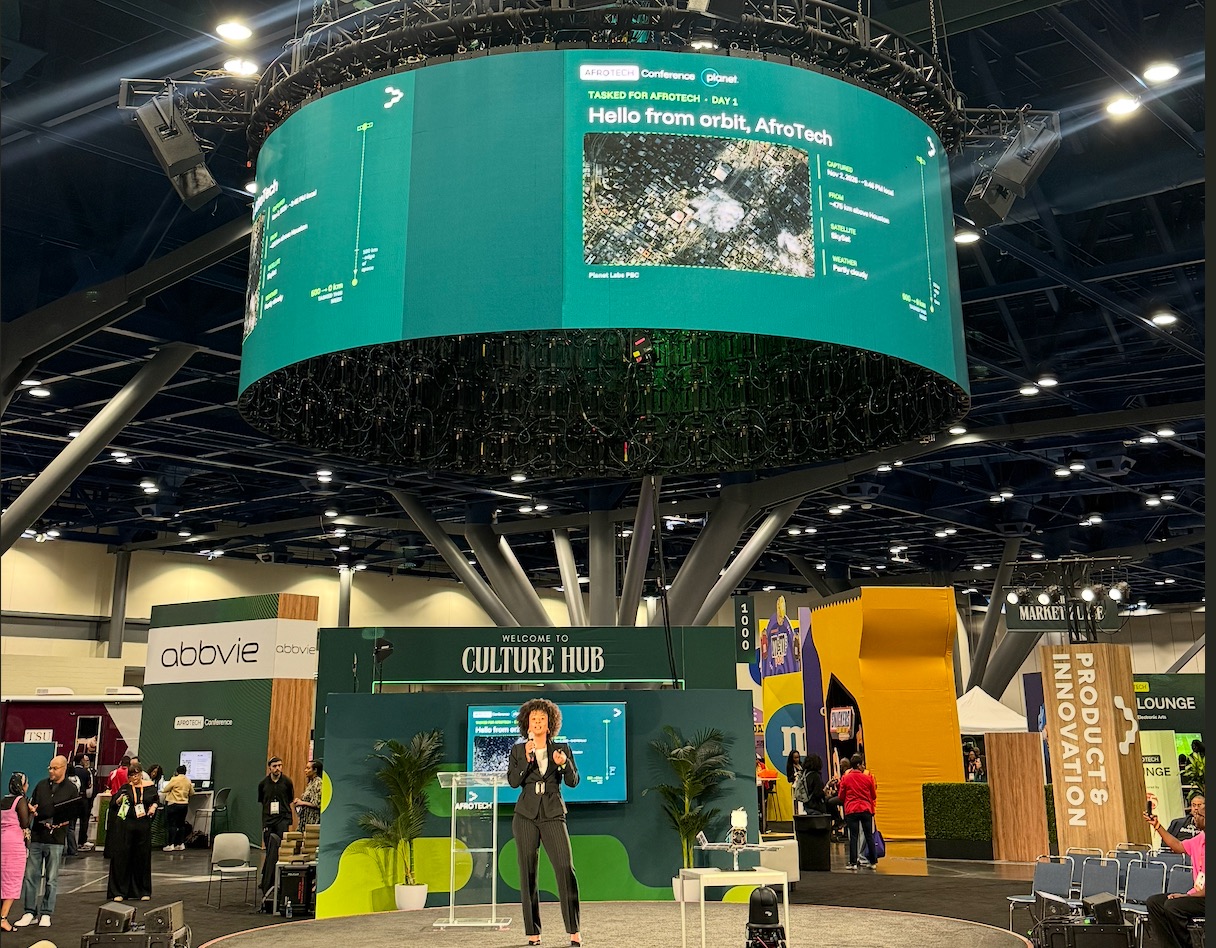
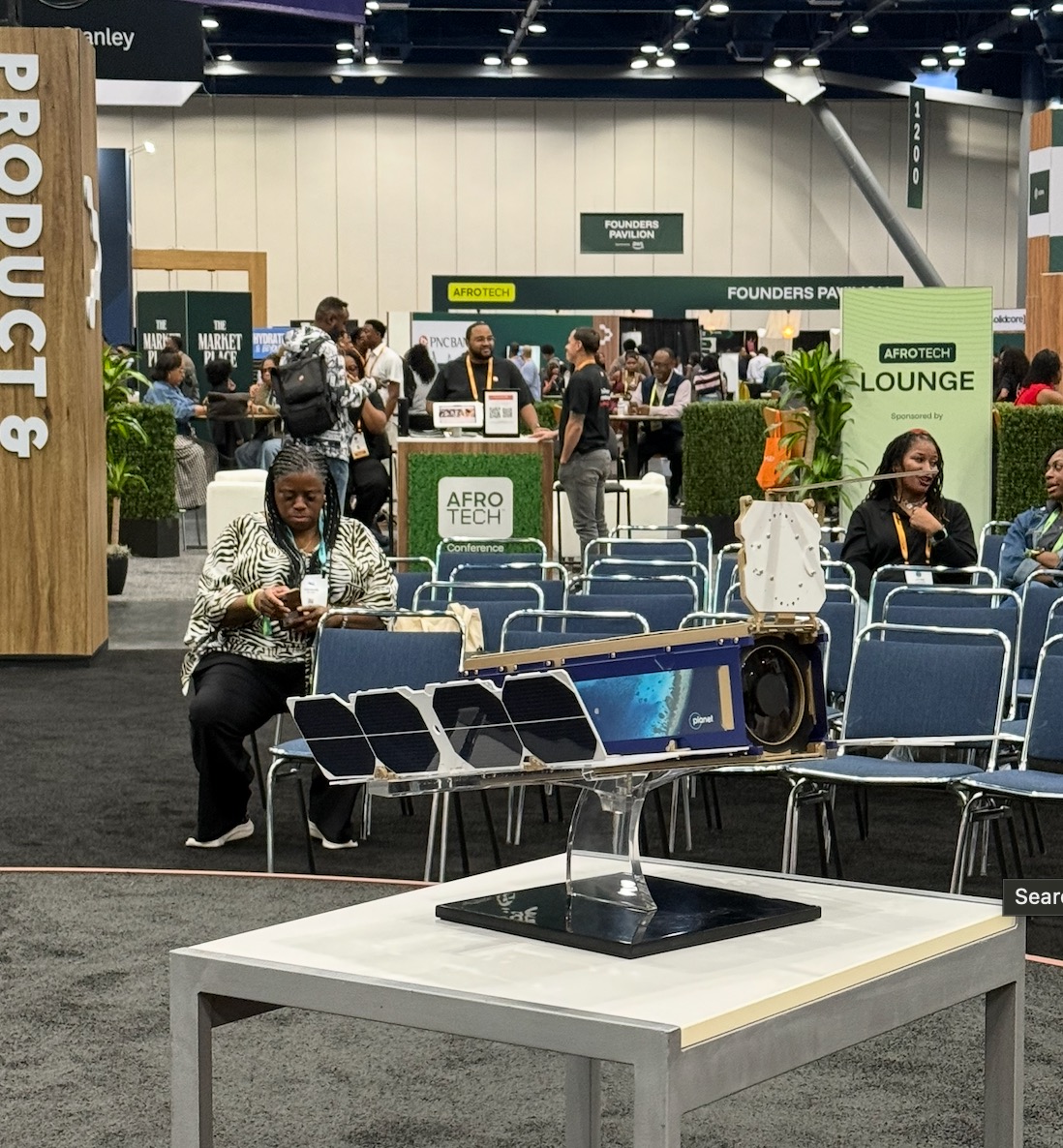
This session woke up the kid in me as the process of building, testing, launching and then managing these satellites was depicted in a digestible 25-minute session. Julia Weber talked about how developers communicate back and forth with the satellite via code. She even took an overhead picture of Afro Tech to be displayed in her presentation.
This satellite is the size of a loaf of bread. That truly blew my mind.
Small language models
A session that I was really tuned into was running small language models on edge devices with Gregory Green.
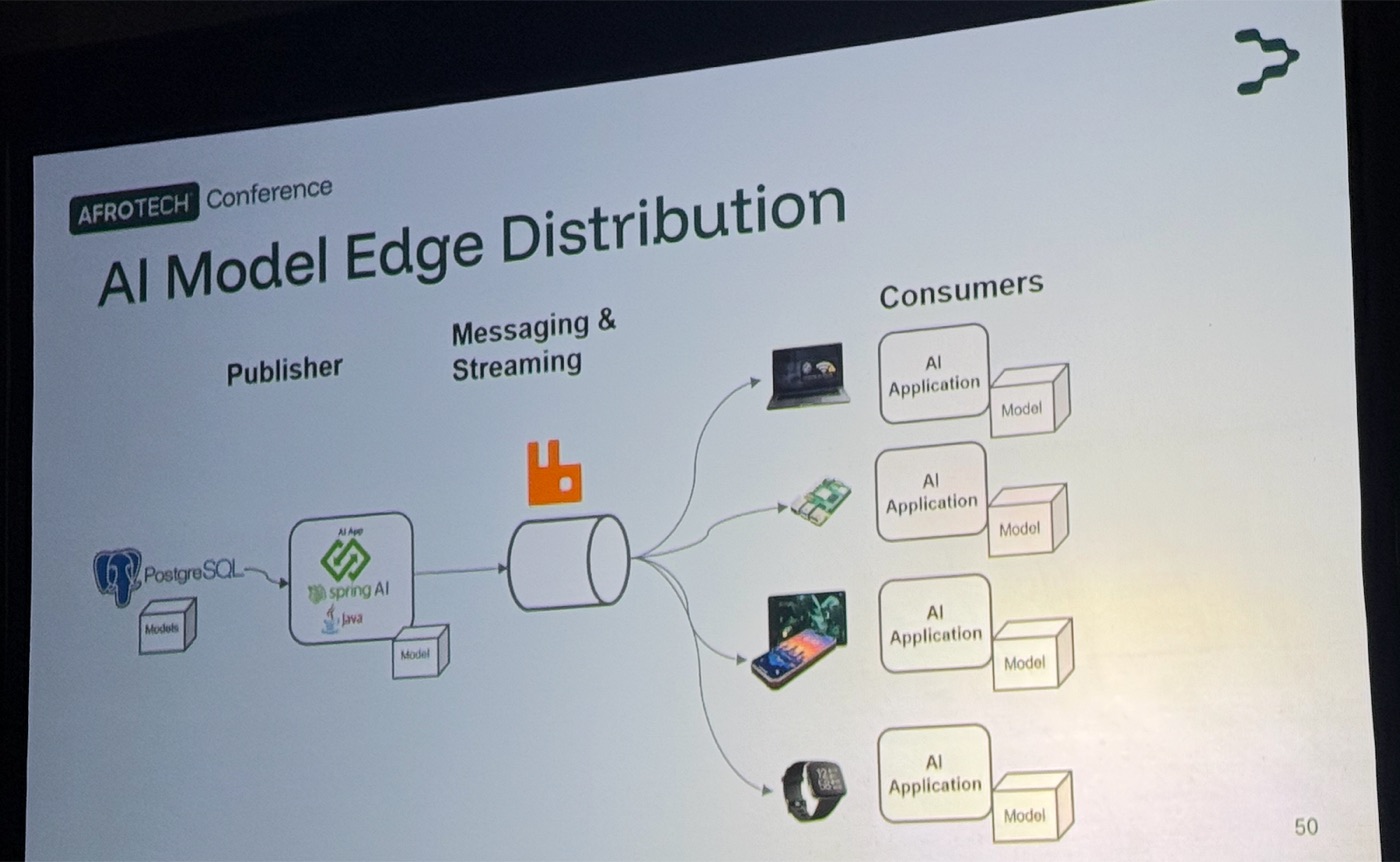
I was already thinking of how best to get my Raspberry Pi set up with a small model so that it can handle workflows and some intelligence, always on, remotely. The models he spoke of are less than 10 GB, so they can run on the edge, not needing to go back to the data centers where the petaflop models live. Using semantic caching and a PostgreSQL database for the tokenization process. Spring AI and Valkey were two resources he pointed to. Here is his GitHub as well.
The algorithm on dating
As I was leaving a session, I saw a massive crowd around the Authors stage. I was informed that it was in fact "Reesa Teesa" from TikTok with her book on the ordeal. She was joined on stage by Anwar White, a dating coach who also has a new book out. It was an interesting dialogue about the impact of social media on dating.
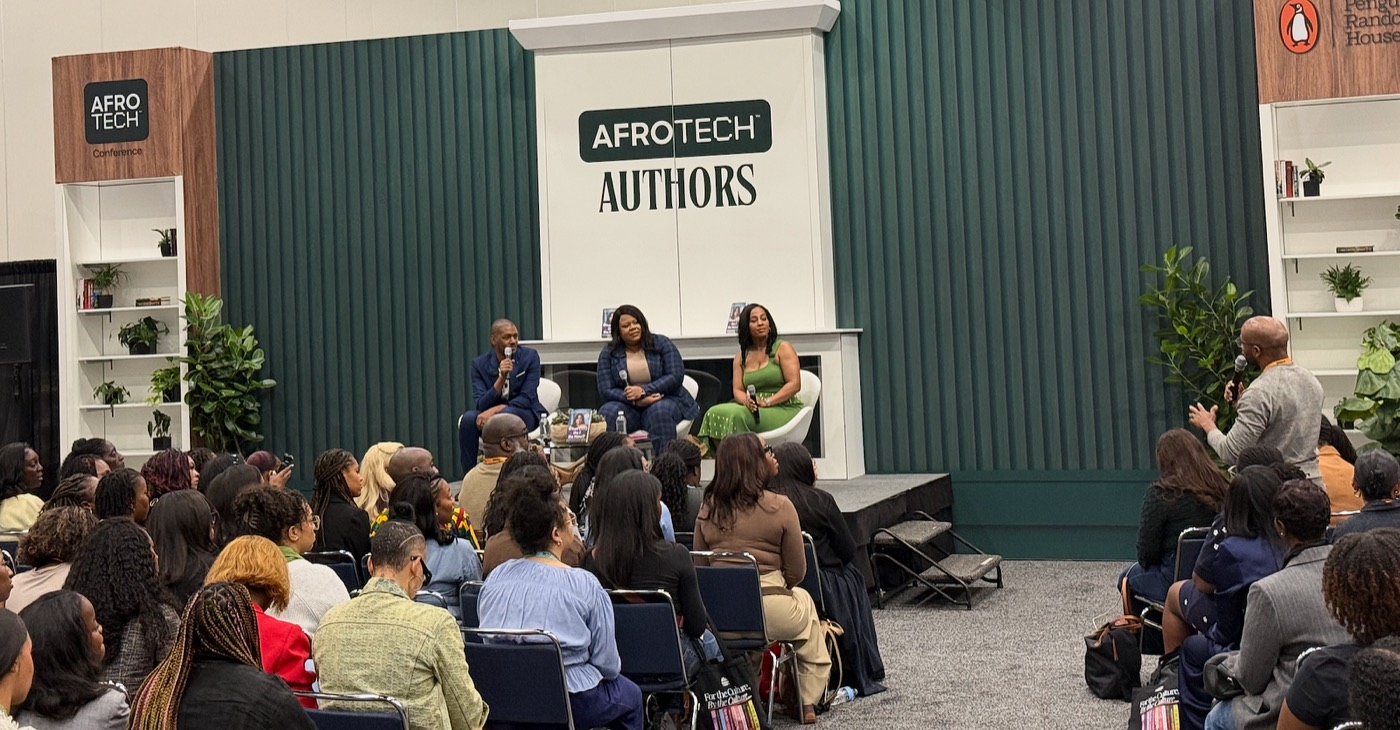
Anwar had a good piece of advice, saying that women should look for servant leaders: if they serve their community, then they will be able to bring that energy to the relationship. There was also someone in the audience soliciting thoughts on her idea, which was for women to accept applications from men who want to date them. The polling of the men in the audience seemed to not agree with that direction. But it did make me think of an article I wrote on the future of dating.
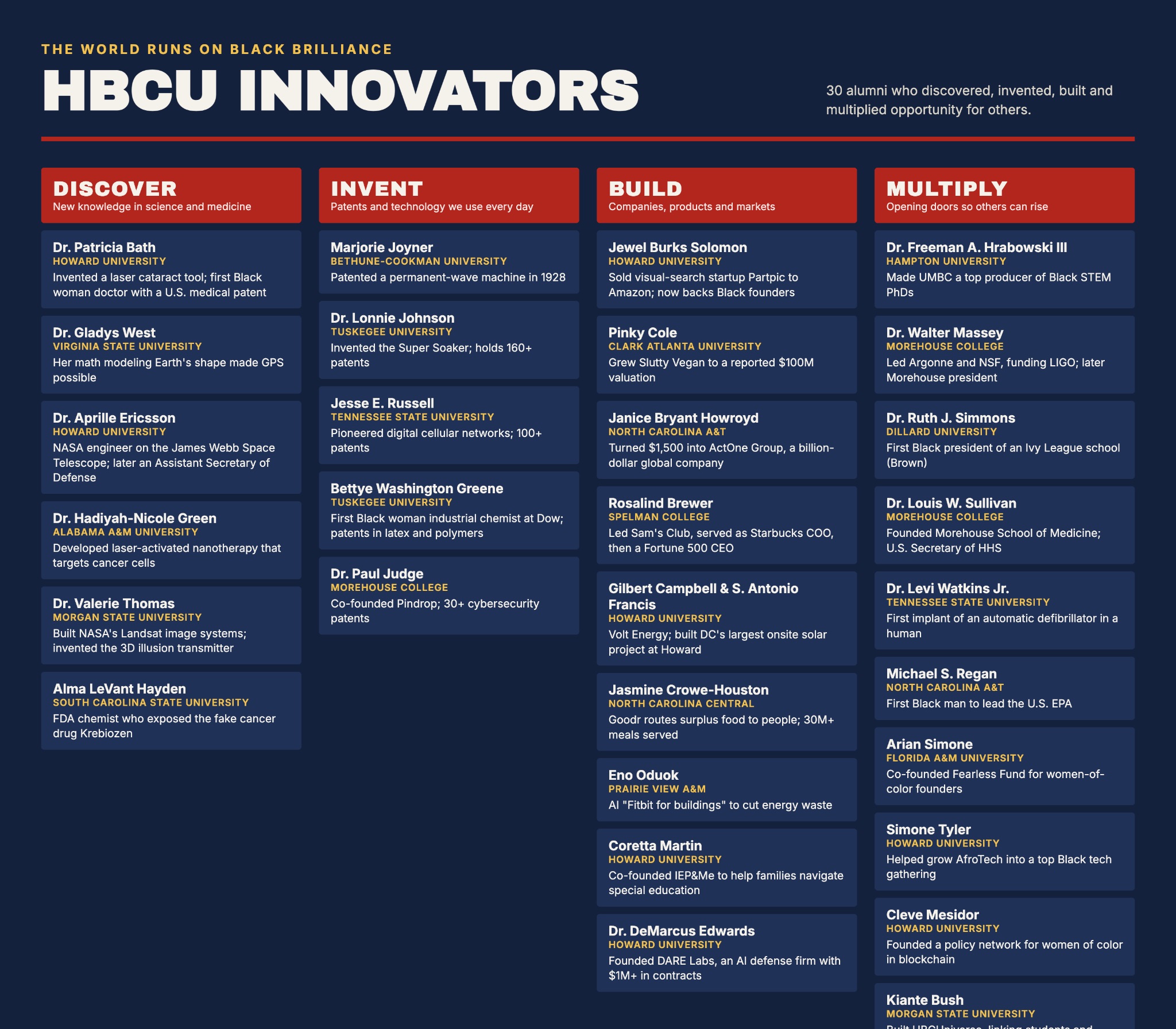
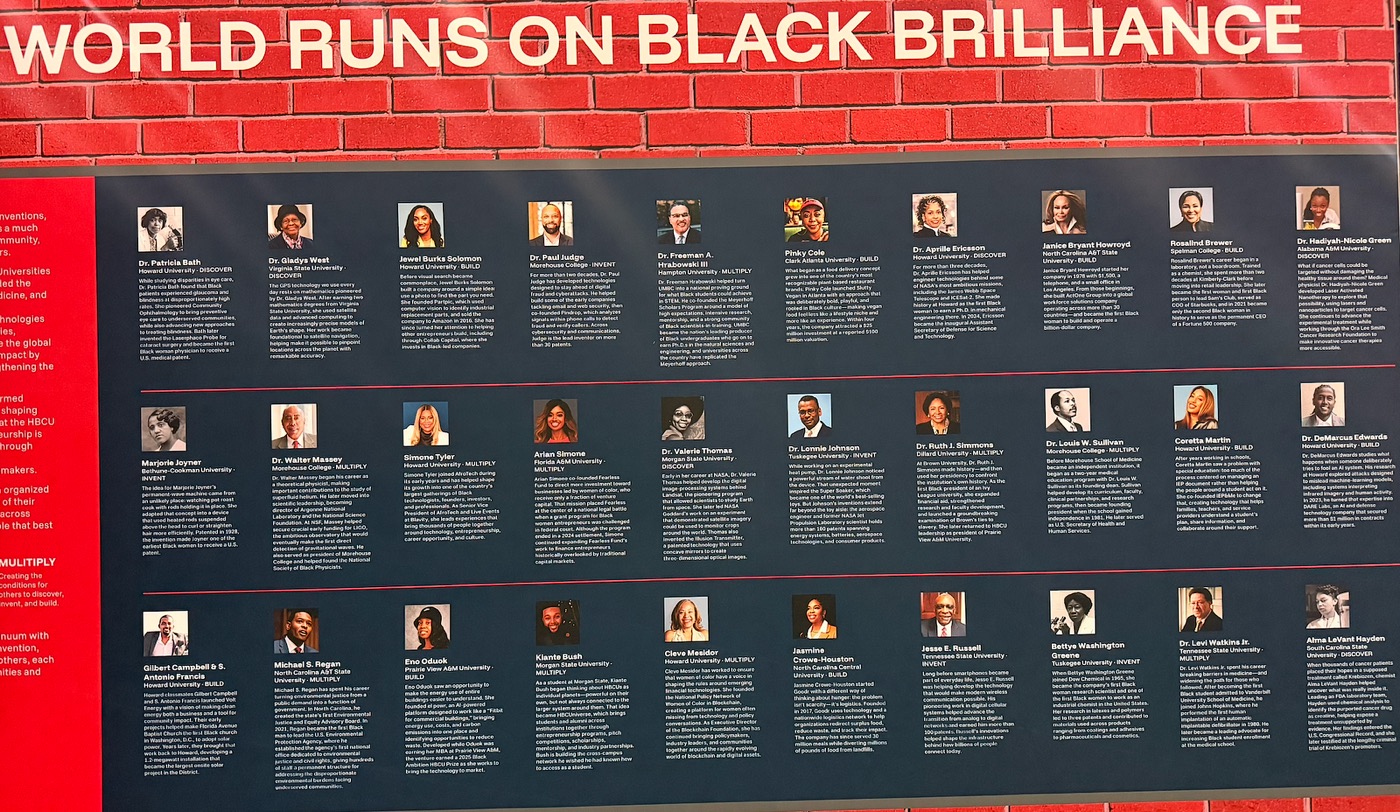
Activation in the HBCU Yard section
Having an activation that showed all of the contributions HBCU grads have made to the advancement of technology was quite profound. I recreated the activation in a digestible asset.
Remix Chef activation
I wanted to represent the true diversity in the activations that were put forth. Kolby Kash, a Houston-born chef who started out in the technology space and then found his passion in cooking, was doing a tasting at the Remix Chef activation. Red beans and rice with the creole sauce and a McStrip was sabroso. I ignored the lady next to me who was speaking way too loud given our proximity to the chef. She had opinions on it needing more salt, and in my head I couldn't help but think of how hypertension is the leading cause of death in Black men. I chose to keep my comments to myself.
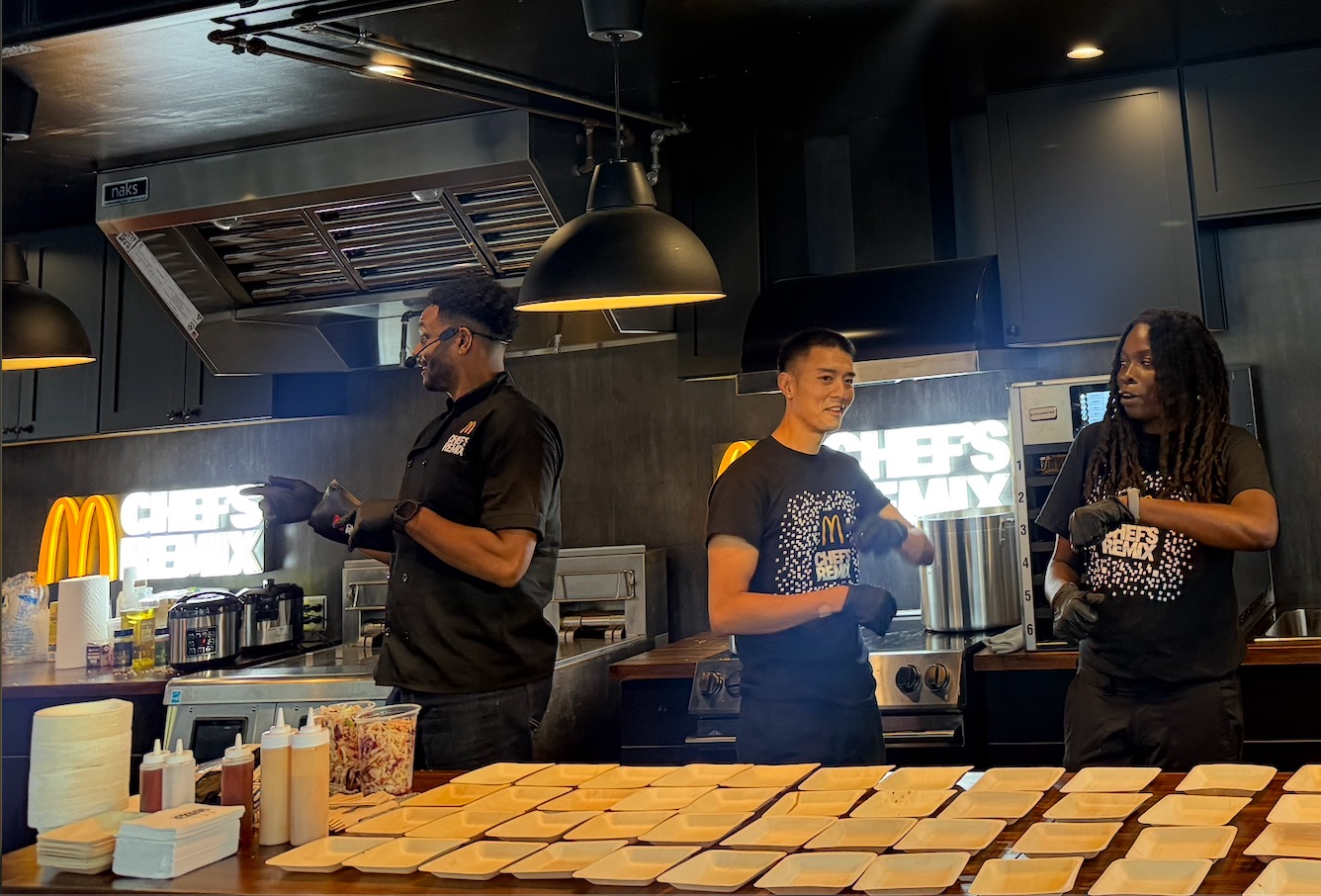
This was a great story about taking what you learned in one world and carrying it into the one you actually love.
Honorable mention
Ancestry AI allows for the stitching together of not just census records but artifacts like photos and train car records to help people better understand their history. I am really intrigued by how AI will empower this platform, and what it can mean more broadly for fractured families and the sense of identity it can give Black people.
Lenovo ThinkStation is essentially a data center on the desktop, which allows for GPUs to be always available, not waiting in queue at the data centers they're building in your backyard.
The Smart Cities activation was intriguing, as they spoke on how to utilize AI to manage the power grid. An ironic turn of events, as the thing consuming power helps us better utilize our power grid. There were also solutions for frictionless interactions with local governments.
Venture capital firms spoke on what it takes to raise capital. It's interesting that they spoke on how AI wrapper applications are less likely to get funded, while a subscription watch company (I'm pretty sure it was Watch Gang) ended up making millions for a solopreneur. Kobie Fuller and Monique Idlett did a great job providing perspective.
King Willonius had a dope video where he recreated Dune with all of the top Black actors.
What Afro Tech made clear to me
I have been thinking small. Making a decision and working a plan can lead to a whole new existence in a few months' time. This age of AI is going to need human-centered, culture-flavored participants to build the future.
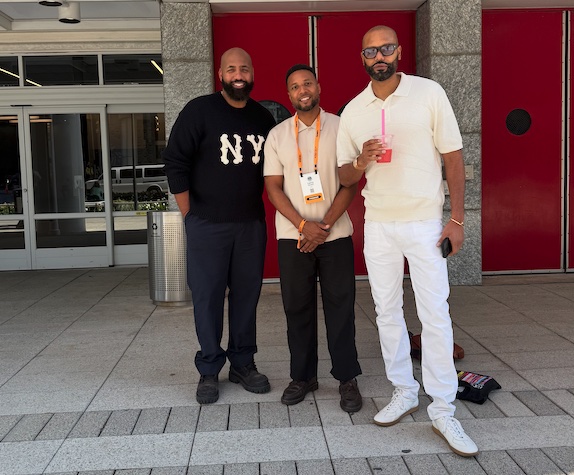
I was given a lot of positive feedback on FranklyData, which is what I have been building over the past few months. My goal is to lean more into getting traction for the platform and continually building a product that I truly believe in. And although I was not fully ready to pitch on the spot, I will certainly be sliding in EYL's DMs for funding in the near future. Hopefully this picture will help.
Larryfgordon.com is a digital asset that I will continue to nurture through my ideas and prototypes. Ideas are worth nothing if they stay in your head. Pouring into a digital property that represents my talents and ideas is a focus for me.
Claude workflows can drive discipline and intentionality. I am committing myself to build out automations that make my life easier, so that I may share my findings with others.
I do plan on returning next year with a lot more intentionality, and hopefully a business that I can be proud of.
More from the Outpost
All posts →
No. 11Oct 14, 20266 min
A Love Story with Data
It started with a Blogger blog in 2009 and a one-click Google Analytics integration. The breadcrumbs we leave online are an asset we own, and most of us give it away freely.
No. 10Sep 24, 20266 min
Principles of AI Regulation
I rewatched I, Robot and came away with three ground rules for a world where machines and humans co-exist: benevolence, decentralization, and mutuality.

No. 09Sep 17, 20268 min
Extinction or Utopia: AI in 2026
A group chat about whether there should be an "AI slow down" propelled me to write: what one would look like, whether the AI leaders calling for it are genuine, and why I'm for it anyway.